
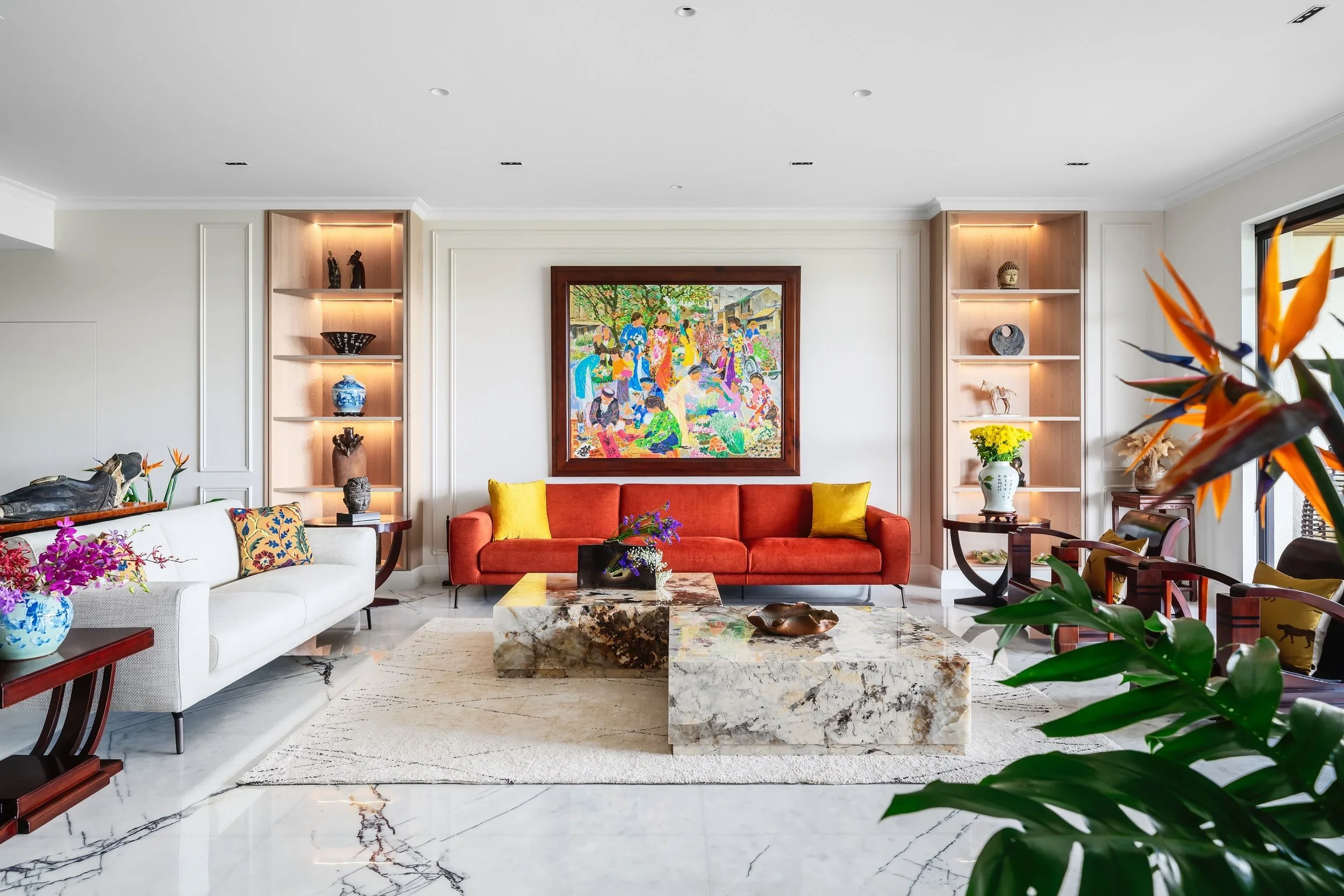
Modern interior design in Singapore is defined less by a strict formula than by a certain quality of composition. It brings together clean architectural lines, current material sensibilities, and a strong awareness of how a home is actually lived in.
In condominiums and landed properties alike, the appeal of the style lies in its ability to feel current without appearing overly trend-driven, and polished without becoming impersonal.
Key Takeaways
Modern contemporary interior design combines the clarity of modern design with the flexibility of contemporary styling.
A strong scheme balances functionality, comfort, and personality rather than focusing on appearance alone.
Colour, form, texture, material contrast, greenery, and art all play a role in shaping a cohesive interior.
The most successful homes use restraint, allowing statement features and layered details to work in harmony.
What is Modern Contemporary Interior Design?
Modern contemporary interior design sits at the intersection of two related but distinct ideas.
“Modern” refers to a design language shaped by the early to mid-20th century, with an emphasis on clean lines, functional forms, and a restrained visual structure. “Contemporary,” by contrast, reflects the present moment. It is more fluid, drawing from current lifestyles, evolving tastes, and newer material applications.
When these two sensibilities come together, the result is a home that feels grounded yet current. The overall look is typically characterised by clarity of form, thoughtful contrast, and a careful balance between crisp architectural elements and softer, more tactile details. Rather than relying on ornament, the style depends on proportion, materiality, and composition to create interest.
In Singapore homes, this often translates into interiors that feel open, composed, and quietly expressive. Finishes may range from natural timber and stone to glass, metal, and textured fabrics, while furnishings tend to favour clean silhouettes softened by curated accents, greenery, or artwork.
What Defines a Well-Designed Modern Contemporary Home?
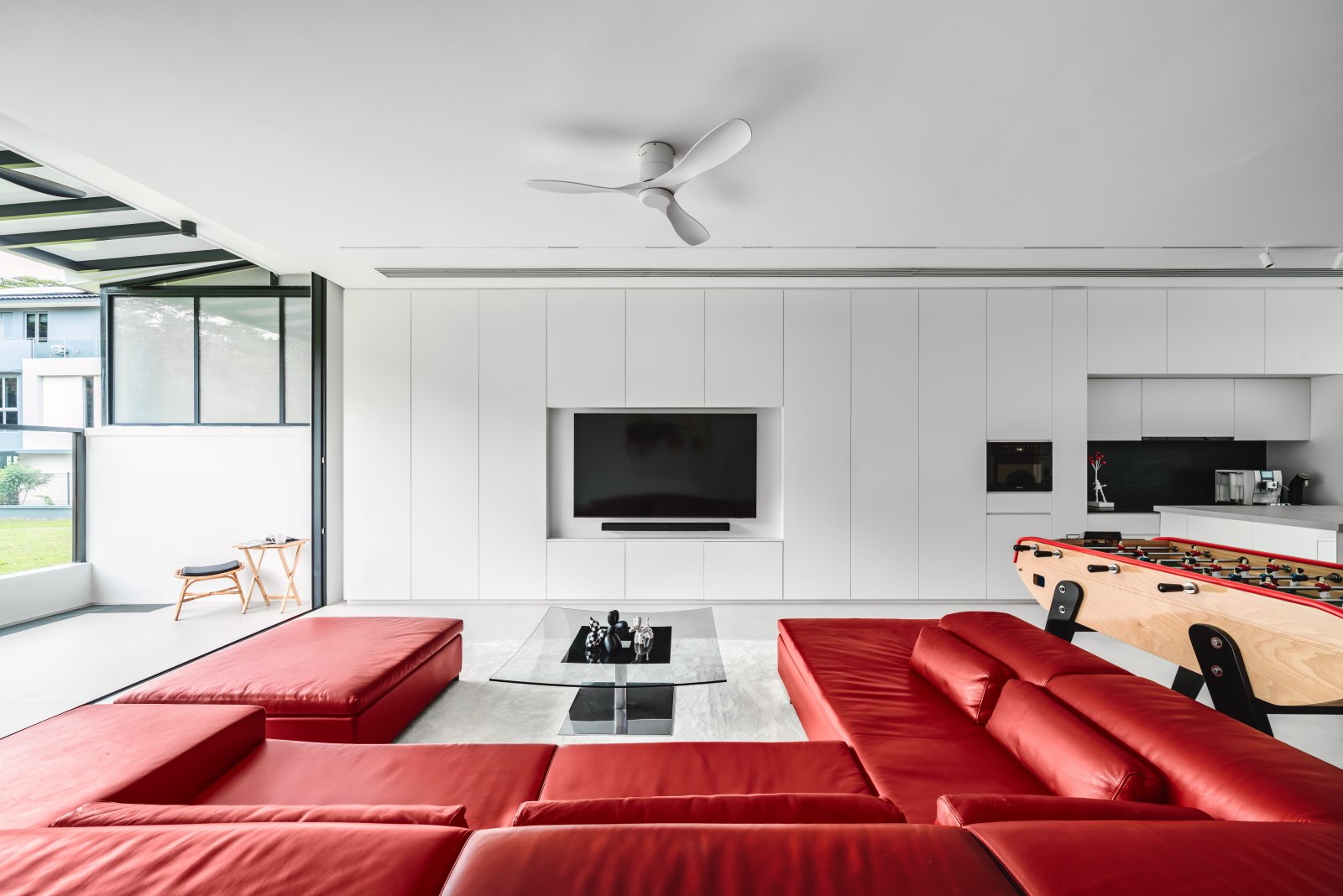
A modern contemporary interior is most compelling when it does more than look current. It should also support the rhythms of daily life while maintaining a strong sense of atmosphere and identity.
In practice, this often comes down to three considerations: functionality, comfort, and character.
Functionality and Spatial Flow
Good design begins with how a space works. A home should move easily from one zone to the next, with layouts that support daily routines rather than interrupt them. In condominiums, this may mean improving openness and circulation within a compact footprint. In landed properties, it may involve creating a stronger relationship between larger communal spaces and more private rooms.
Furniture and built-ins should also serve a clear purpose. Storage, ergonomics, and circulation all matter just as much as visual style. A contemporary home feels composed partly because it has been planned with use in mind.
Comfort and Liveability
A polished interior should still feel welcoming. Lighting, ventilation, scale, and colour all contribute to how comfortable a space feels over time. Natural light, layered illumination, and a palette with enough warmth or softness can make a home feel more relaxed and settled, even when the design language is clean and architectural.
Comfort in this context is not decorative. It is created through proportion, ease of movement, and an atmosphere that supports both activity and rest.
Character and Curation
Modern contemporary interiors benefit from a sense of personality, but that character is usually expressed through curation rather than excess. Art, collected objects, sculptural pieces, or a distinctive material palette can all add individuality without making the home feel overly styled.
The goal is not to fill the space, but to shape it with intention. A well-considered interior feels personal because each element appears selected rather than simply added.
Key Elements of Modern Contemporary Interior Design
Modern contemporary interiors are shaped by a careful balance of structure, warmth, and visual restraint. Rather than relying on a single defining feature, the style comes together through a series of considered elements, from colour and form to materiality, texture, and art.
When these components are thoughtfully composed, they create a home that feels current, cohesive, and quietly refined.
A Controlled Use of Colour
Colour is one of the clearest ways to establish tone within a room. In modern contemporary interiors, it is often used with restraint. Rather than relying on many competing hues, the palette is usually structured around a dominant base, a supporting secondary tone, and a smaller accent colour that introduces contrast.
This approach helps a space feel balanced while still allowing room for personality. Deep greens, muted earth tones, warm neutrals, charcoal, blue-grey, or rust can all work well, depending on the architectural setting and the quality of natural light.
In Singapore, where daylight can be intense, colour tends to read more strongly, which makes measured application especially important.
The 60-30-10 principle remains a useful reference point. A dominant tone anchors the space, a secondary tone adds dimension, and a smaller accent provides focus through upholstery, artwork, lighting, or decorative objects.
Contrast in Shape and Silhouette
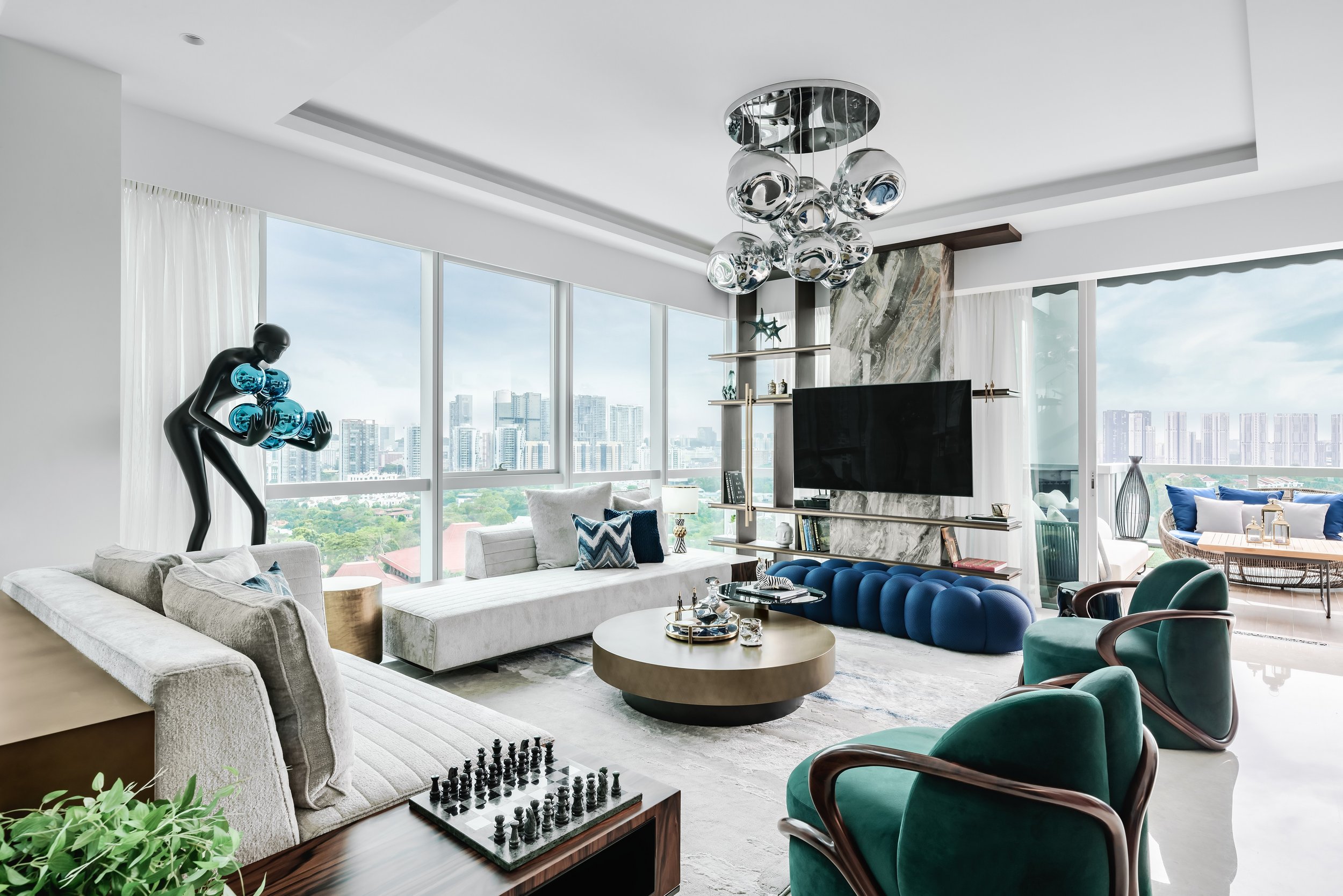
Shape plays a quiet but important role in how a room feels. Straight lines and geometric forms create structure and order, while curves and irregular silhouettes soften the composition and make it feel more inviting.
A modern contemporary space often benefits from both. A rectangular dining table, linear cabinetry, or architectural shelving can establish clarity, while a rounded lounge chair, sculptural coffee table, or organically shaped accessory introduces ease and visual variation.
This balance is especially useful in homes with strong architectural lines. Condominiums, in particular, can benefit from softer forms that offset more rigid room envelopes, while larger landed homes can use shape contrast to create rhythm across open-plan spaces.
Layered Design Influences
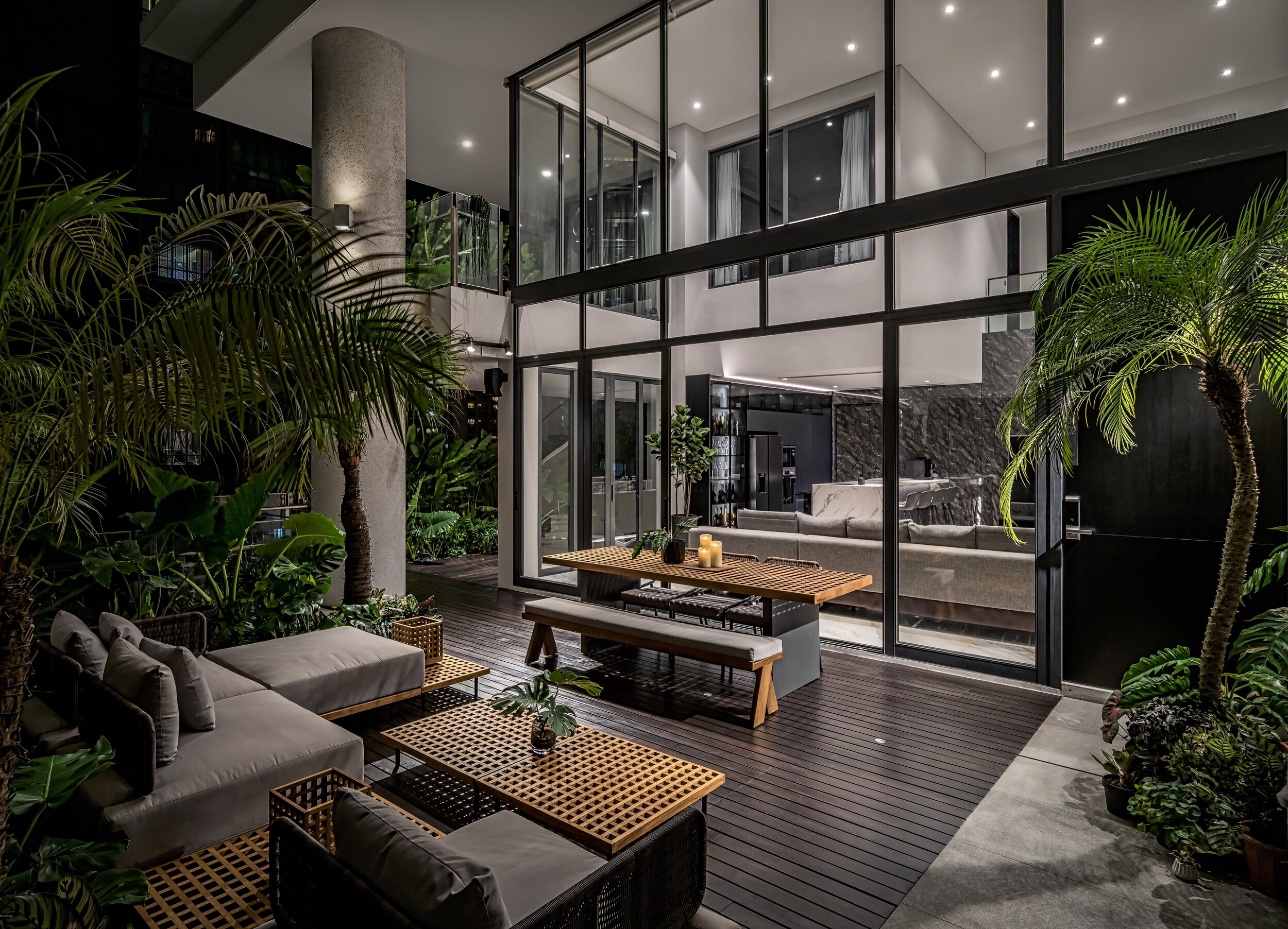
One of the defining strengths of contemporary design is its flexibility. It allows different influences to coexist, provided they are tied together through a clear visual language. A home may pair Scandinavian restraint with darker architectural detailing, or introduce tropical references through woven textures and planting within a more streamlined interior envelope.
What matters is not how many styles are referenced, but how coherently they are edited. When done well, this layering gives the home depth and individuality. When overdone, it can make the space feel undecided.
A more disciplined palette, consistent detailing, and repeated material cues help keep the design cohesive even when multiple influences are present.
Texture and Finish
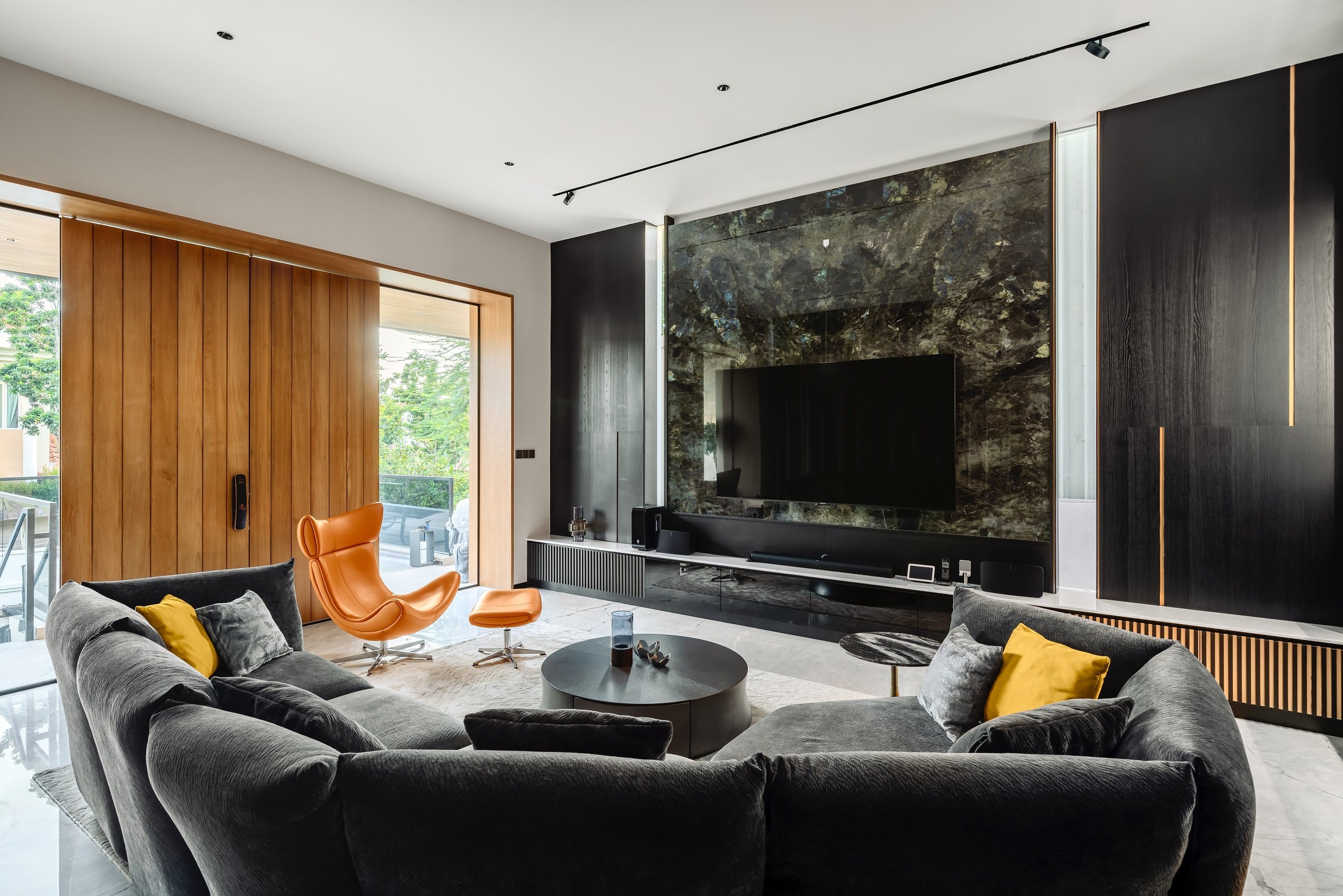
Texture gives a room richness that colour alone cannot provide. In modern contemporary interiors, this often comes through a combination of matte and reflective finishes, smooth and tactile surfaces, or hard and soft materials placed in contrast.
A limewash wall next to brushed metal, linen upholstery paired with stone, or timber set against lacquered cabinetry can create a layered look without overwhelming the room. These contrasts are often what make a space feel nuanced and complete.
In Singapore, finish selection should also consider long-term performance. Materials that respond well to humidity, heat, and regular use tend to support both the appearance and durability of the home over time.
Material Balance
Material selection is one of the clearest ways to communicate refinement without overstatement. Timber, stone, glass, metal, porcelain, and performance fabrics each contribute a different quality to a room, both visually and functionally.
Natural materials tend to bring warmth and depth, while more engineered or polished surfaces introduce precision and clarity. The strongest interiors usually rely on balance rather than dominance:
A stone countertop may sit comfortably with timber joinery.
Bronze-toned metalwork may add definition to a neutral space.
Glass can lighten a heavier composition and improve the sense of openness.
In both landed homes and condominiums, thoughtful material pairing helps the design feel composed, contemporary, and appropriate to the way each zone is used.
Biophilic Details
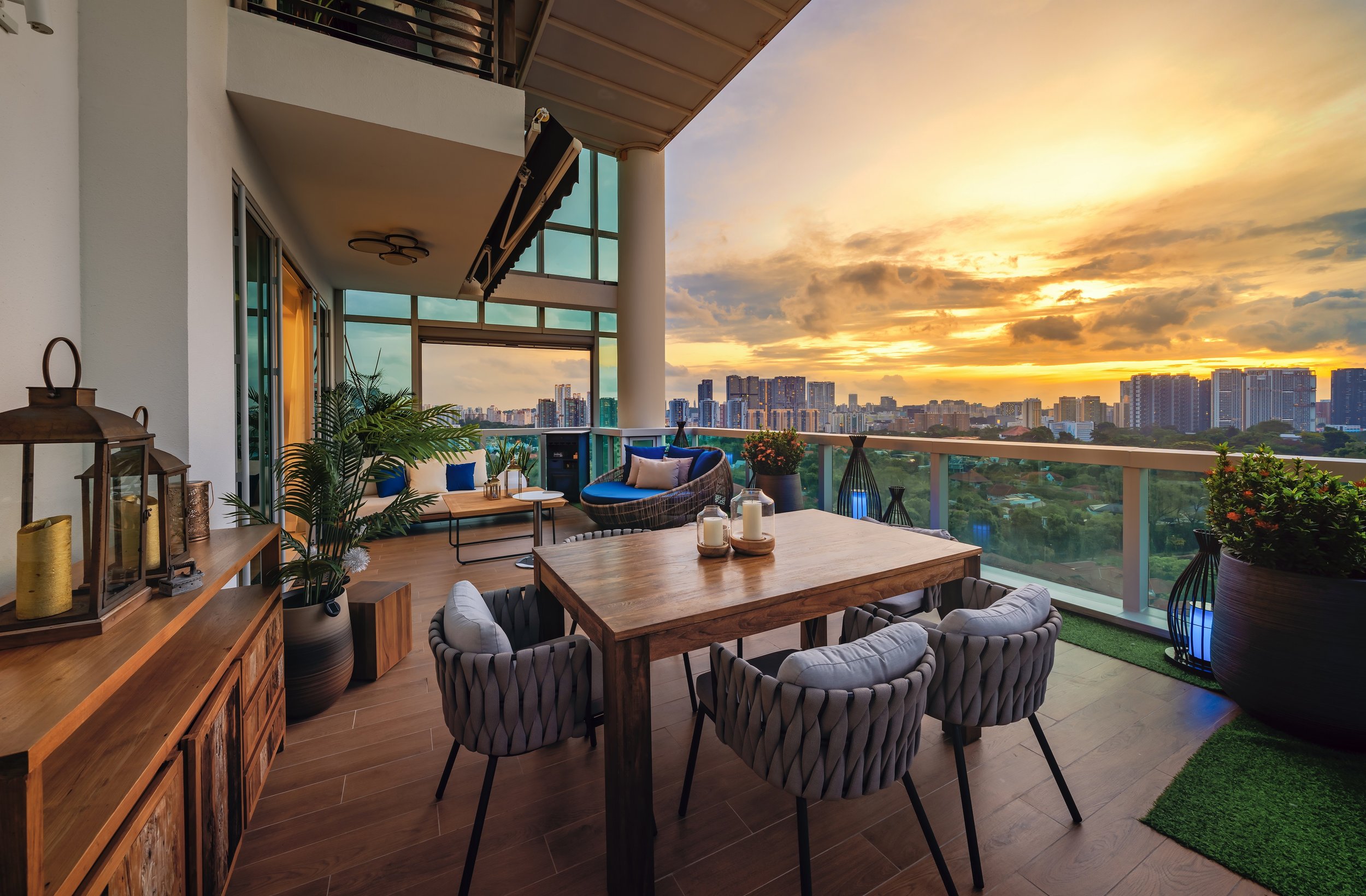
Biophilic design remains especially relevant in Singapore, where climate, light, and landscape all play a role in how homes are experienced. Natural light, ventilation, greenery, stone, and timber can all help a modern contemporary interior feel calmer and more grounded.
Indoor planting is often used not simply as decoration, but as a way to soften edges and introduce a more organic presence into the space. In larger homes, this may extend to courtyards, terraces, or transitional indoor-outdoor zones. In condominiums, even a more compact arrangement of greenery can make the home feel fresher and more layered.
Natural elements work particularly well in contemporary interiors because they offset the cleaner, more structured aspects of the design.
Art as a Focal Layer
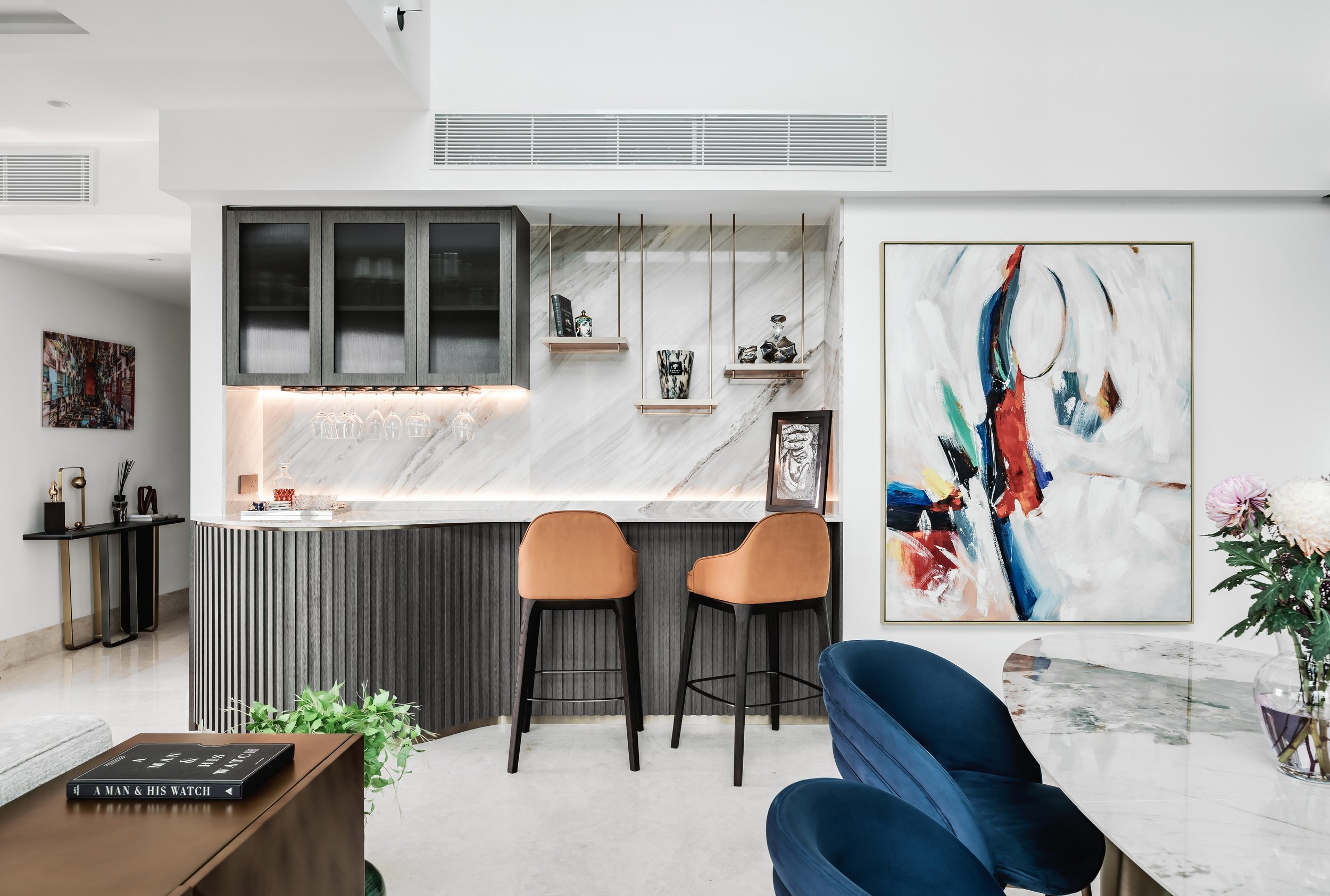
Art often plays an important role in modern contemporary homes because it introduces identity without disrupting the overall restraint of the space. A single oversized work, a sculptural object, or a curated wall arrangement can anchor a room and give it a stronger point of view.
The effect is often heightened by placement and lighting. When art is given space and emphasis, it contributes to the atmosphere of the room rather than reading as an accessory. In this way, it becomes part of the architecture of the interior.
Common Missteps to Avoid
A modern contemporary home tends to work best when there is clarity and restraint behind the design decisions. Certain missteps can disrupt that balance and make the space feel visually heavy or less comfortable to live in.
Too many statement pieces can compete for attention and reduce the impact of each one. A sculptural light, an expressive artwork, and a heavily patterned feature wall may all be individually strong, but together they can create visual congestion, especially in smaller homes.
An overreliance on glossy finishes can also be problematic. In Singapore’s bright daylight conditions, highly reflective surfaces may produce glare and make a space feel harsher than intended. A more balanced mix of matte, textured, and polished finishes usually creates a calmer result.
Another common issue is an overly rigid composition. If a room is made up entirely of straight lines and hard edges, it can start to feel severe. Introducing curved or organic forms helps soften the atmosphere and makes the space feel more complete.
Colour should also be handled with care. Strong tones can be effective, but without enough neutral space around them, they may begin to dominate the room. In warm climates, this can make interiors feel visually hotter or more restless than necessary.
Finally, furniture should never be selected on appearance alone. Pieces that look striking but are awkward to use tend to undermine the practical integrity of the space. A well-designed home should feel comfortable in everyday use, not simply photogenic.
How to Approach the Style Thoughtfully
For homeowners considering a modern contemporary direction, the process usually begins with observation rather than decoration. The architecture of the home, the quality of natural light, the proportions of each room, and the lifestyle of the household all shape how the design should be interpreted.
A clear visual direction is useful early on. Reference images, material samples, and furniture studies can help establish recurring themes, whether that is a preference for softer neutral palettes, darker architectural detailing, tactile materials, or more sculptural forms.
From there, the design can be developed through a cohesive material and colour palette. This tends to create a stronger result than making isolated product selections one at a time. When the larger design language is clear, it becomes easier to decide where contrast, texture, or focal moments should sit.
The most successful interiors are usually not those with the most features, but those with the strongest sense of editing.
Considering Professional Guidance
Modern contemporary interiors often appear effortless, but that effect typically depends on careful planning. Layout refinement, material coordination, custom detailing, lighting decisions, and contractor execution all shape the final quality of the space.
For homeowners who want a more cohesive outcome, professional design guidance can help translate ideas into a more resolved interior language. This is especially relevant when working with larger homes, open-plan layouts, or projects where architectural features and interior detailing need to feel closely integrated.
Give us a call today to discuss your options in more detail.
Frequently Asked Questions
What is the best way to choose a hero material for a room?
A hero material is usually most effective when it is applied to a key focal area and supported by quieter surrounding finishes. Stone with expressive veining, richly toned timber, or a distinctive textured surface can all work well when given enough visual space.
How can open-plan living feel cohesive without appearing undefined?
Zoning is often created through lighting, rugs, furniture placement, ceiling treatment, or changes in material application rather than full physical separation. The goal is to create distinction while maintaining continuity across the larger space.
How should white or off-white tones be selected for Singapore homes?
Natural light in Singapore can make cooler whites feel stark. Off-whites with subtle beige, taupe, or grey undertones often create a more balanced effect while still keeping the space bright and clean.