
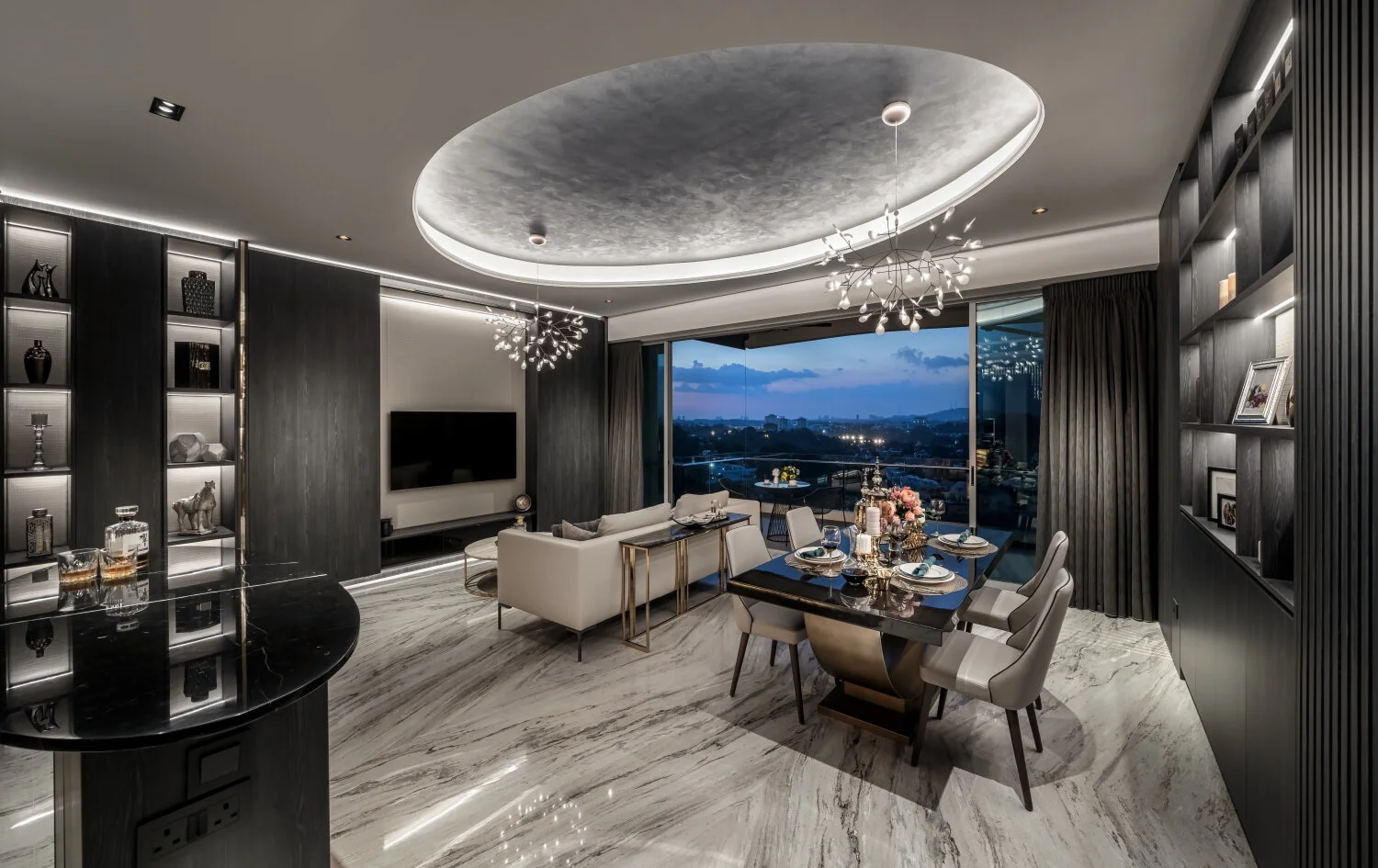
A modern luxury interior design concept brings together clarity, restraint, and thoughtful planning across layout, materials, lighting, and storage. This is what makes a home feel composed rather than excessive. It is expressed through a home that feels calm, comfortable, and deeply considered, rather than through expensive finishes alone.
At its core, the concept creates an environment that supports daily life while holding a strong visual identity. Layout, storage, lighting, materials, and proportion work together to shape a home that feels calm, refined, and easy to live in.
This balance matters most in condominiums and landed properties, where homeowners often want interiors that feel polished without becoming overstated. The result is a home that functions well over time and reflects the pace and character of the people living in it.
Key Takeaways
High-end interior design rests on five core ideas that shape both the look and the feel of a home.
Thoughtful design decisions that support both aesthetics and everyday living.
A strong layout improves comfort and usability by reducing friction between different areas of the home.
Integrated storage helps preserve visual clarity by incorporating practical needs into the architecture.
Material contrast, lighting, and proportion give the interior depth, warmth, and balance.
A well-resolved interior does not depend on size alone; it depends on how intentionally the home is planned.
What Defines a High-End Interior Design Concept
Bespoke interior design in Singapore brings together visual sophistication and practical comfort in a way that feels effortless. Some call this modern luxe interior design sensibility, though the outcome matters more than the final look. A home should also support the routines, preferences, and lifestyle of its occupants.
Several elements typically shape this kind of interior:
Layout: A well-considered layout creates a sense of order and ease. Spaces are planned around movement, privacy, and use, allowing transitions between living, dining, working, and resting areas to feel natural.
Material palette: Natural stone, such as marble and travertine, timber veneers in walnut or oak, fluted glass, and matte or brushed metal finishes appear often. These are layered with control rather than variety for its own sake, so each surface earns its place.
Lighting: Lighting shifts a home from bright and practical through to calm and ambient across the day, while also drawing attention to architectural details and key focal points.
Storage: Integrated cabinetry and concealed joinery keep everyday items out of sight without disrupting the design.
Proportion: Furniture, lighting, and feature elements need to relate well to the volume of the space so that nothing feels visually heavy or underwhelming.
Personalisation: Art, collected objects, and custom details bring individuality to a home in a measured way.
Singapore's climate shapes many of these choices. Humidity and heat call for stone, engineered timber, and metal finishes selected for durability. These surfaces resist warping and discolouration over years of daily use. Ventilation, sun exposure, and air-conditioning patterns also influence which materials sit where. After all, a home should stay comfortable through every season, not only on cooler days.
How Modern Luxe Supports Daily Living

A modern luxury interior improves how a home is experienced on an everyday level. Good design makes daily routines feel more seamless, not only more visually framed. For example:
A kitchen planned around actual cooking habits feels more intuitive and comfortable over time.
A home office designed with privacy and acoustics in mind supports better concentration.
Entertainment areas planned for conversation and easy circulation make gatherings feel more relaxed and natural.
At Leedon Green, this thinking shaped the kitchen and living zones around how the family actually cooks and entertains. The layout supports daily life rather than only framing it for show.
This attention to use matters most in condominiums, where space planning needs to stay deliberate. In landed homes, larger floor plates call for cohesion across multiple zones instead.
When a space aligns with how a household lives, it becomes easier to maintain, more pleasant to inhabit, and more adaptable over time.
Functional Foundations of a Modern Luxury Home

A refined interior depends on function as much as appearance. Without practical clarity, even a visually striking home can feel unresolved.
Intentional Layout
How a home is organised shapes how open, comfortable, and intuitive it feels. Layout planning covers where furniture sits and how movement happens between areas.
In condominiums, this often means improving visual openness between shared living and dining spaces. In landed homes, it may involve creating stronger transitions between communal zones and more private parts of the house. Regardless, good planning reduces awkward circulation and gives each area a clearer sense of purpose.
A successful layout also supports the social character of a home. Seating arrangements, sightlines, and zoning can shape whether a room feels restful, welcoming, or suited to hosting. Small adjustments to a doorway's position or a corridor's width often carry more weight than any single decorative choice.
Integrated Storage
Storage is one of the least visible but most important contributors to a composed interior. Without it, even a carefully designed home can feel visually crowded over time.
Integrated storage absorbs practical needs into the architecture rather than treating them as an afterthought. Full-height cabinetry, concealed compartments, and built-in joinery preserve clean lines while accommodating everyday items discreetly.
In condominiums, this kind of storage makes a significant difference to the calm of the space. In landed properties, it helps maintain consistency across larger rooms and multiple storeys.
Functional Lighting
Lighting plays a practical role well beyond decoration. A well-lit home supports different modes of living throughout the day, from cooking and reading to entertaining and relaxing.
Task lighting matters most in kitchens, workspaces, dressing areas, and bathrooms, where visibility needs to stay precise. Ambient lighting provides general illumination, and layered accent lighting adds softness. Considered together, lighting becomes part of a home's architecture rather than a finishing detail.
Visual Elements That Shape the Interior

Once the practical framework of a home is established, visual elements give the space its identity. In modern luxury interiors, these design choices stay measured and cohesive, with emphasis on material quality, atmosphere, and balance.
A Cohesive Design Language
A cohesive design language helps different areas of a home feel connected without feeling identical. This matters most in larger landed residences, where multiple spaces need to relate to one another across storeys. In condominiums, the same consistency can make a home feel more expansive than its footprint suggests.
Cohesion usually comes from a recurring material palette, consistent detailing, or a shared architectural vocabulary. The effect should feel quiet and assured rather than themed. A home benefits from continuity, and it also benefits from variation where texture or craftsmanship can add warmth.
Material Contrast and Finish Selection
The tactile quality of a home often shapes its atmosphere as much as colour does. Smooth marble, brushed walnut, textured upholstery, dark metal, and soft fabrics all influence how a room is perceived.
In high-end interior design, contrast often gives a space depth and visual maturity. A matte stone surface beside warm timber creates a layered effect. A tailored fabric against a metal detail does the same, feeling more nuanced than a room built around one finish alone.
This approach works well across condominiums and landed homes because it creates richness without heavy ornamentation.
A Curated Colour Palette
Colour establishes mood quickly. In contemporary luxury interiors, palettes are often built around restrained base tones, such as warm neutrals, charcoal, taupe, stone, and muted earth shades. Deeper accent colours then add definition to the design, without overwhelming the room.
A controlled palette helps interiors feel composed and consistent, and it allows materials, art, and furniture forms to stand out clearly.
In homes with expansive views or gardens, interior colours can also echo the surrounding environment, helping a home feel grounded in its setting.
Layered Lighting for Atmosphere

Beyond function, lighting also shapes mood and spatial character. Accent lighting can highlight wall textures, shelving, art, or architectural lines, while softer ambient layers can make a room feel calmer in the evening.
Warm lighting often creates intimacy in lounges and bedrooms, while neutral or daylight tones suit task-oriented spaces better. The most effective schemes use these temperatures and layers selectively, so a home feels adaptable rather than static.
Balance of Shapes and Silhouettes

The geometry of a room influences how formal, soft, or inviting it feels. In interiors with strong, angular architectural lines, rounded furniture or sculptural lighting introduces contrast and ease.
This balance between straight lines and softer forms helps a room feel more resolved. It also keeps a space from feeling visually rigid or overly uniform.
Feature Elements and Focal Points
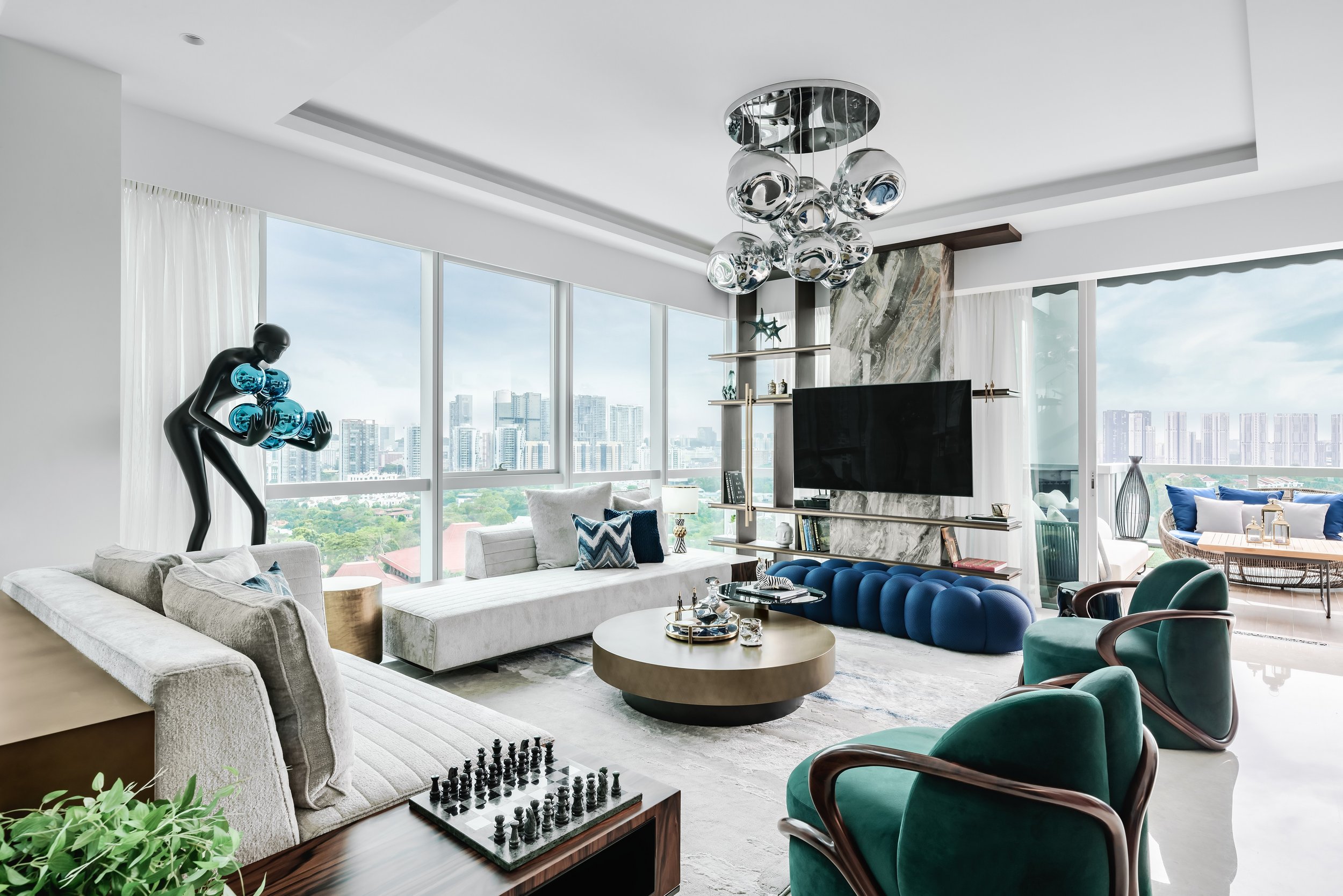
Most well-composed interiors carry a focal point that gives a room a sense of direction. This could be a statement light fitting, a sculptural furniture piece, a fireplace, a stone wall, or a carefully framed artwork.
In modern luxury interiors, feature elements feel deliberate rather than theatrical. They provide emphasis and identity while still sitting comfortably within the wider design language of the home.
Personalisation with Restraint
A home feels most complete when it reflects the people who live in it. Personalisation adds depth through books, objects collected over time, commissioned artwork, or custom design details.
Balance matters most here. Elements integrated with intention make a home feel distinctive and lived-in. When they are introduced without enough consideration for scale or placement, they compete with the clarity of the space. As such, modern luxe interior design favours quiet specificity over display.
Common Misconceptions About Contemporary High-End Interiors
Several assumptions surround modern high-end interiors, and many make the approach seem less accessible than it really is.
It only works in very large homes: A generous floor plan offers flexibility, though scale alone never creates a refined interior. Smaller condominiums can feel just as considered as larger homes when layout, storage, lighting, and proportion are handled well.
It requires a complete overhaul: Some projects involve significant structural change. However, most interior transformations depend on design planning rather than large-scale construction work. A clearer layout, better joinery, strong lighting strategy, and more cohesive material palette can shift a home's feel considerably.
It is mainly about appearance: Visual impact plays a part, but contemporary luxury depends just as much on comfort, usability, and longevity. Homes that look impressive but function poorly rarely feel successful over the long term.
It must feel formal or untouchable: A refined interior can feel warm rather than distant. The most successful homes combine polish with warmth, so a space feels elevated and lived-in at once.
Considering a Modern Luxe Interior Approach
Creating a home that feels refined and easy to live in comes down to thoughtful planning. A successful interior considers how spaces flow, how materials are layered, and how everyday routines are supported through layout, lighting, and storage.
For contemporary interior design that still feels lived-in, planning carries as much weight as material quality. In condominiums and landed homes alike, this approach stays defined by clarity, comfort, and attention to detail rather than by overt statements.
For apartments and larger units, our luxury condo interior design service brings this same considered approach to every home. For standalone properties, our landed interior design services apply the same thinking across larger, multi-storey layouts.
If you’re exploring this direction, the process begins with understanding your property’s spatial potential and how it can shape the way you live. Contact us now to discuss your options.
[BUTTON] Contact Us
Frequently Asked Questions About Contemporary Luxury Interior Design
What defines modern luxury interior design?
Modern luxury interior design brings together clarity, restraint, and thoughtful planning across layout, materials, lighting, and storage. Together, these choices make a home feel composed rather than excessive.
What are the key elements of a modern bespoke interior?
The key elements include layout, material palette, lighting, storage, proportion, and personalisation. Each works alongside the others, rather than in isolation, to shape a calm, considered home.
Does contemporary luxury interior design work in a small condominium?
Yes. Scale alone never creates a refined interior. A small condominium feels just as composed as a larger home when layout, storage, and lighting are handled well.
What materials are used in modern high-end interiors?
Natural stone, timber veneers, fluted glass, and matte or brushed metal finishes appear often. Each is chosen for durability as much as appearance, since Singapore's climate tests materials over time.
How do matte and polished finishes differ in a home interior?
Polished finishes reflect more light and can give surfaces a sharper, more luminous appearance. Matte finishes feel softer and more understated, and the two together create balanced material contrast.
Can different wood tones be used in the same room?
Yes, provided some consistency runs through the undertone or overall palette. Variation in timber adds richness when a clear relationship connects the finishes.
Can a refined interior still work for family living?
Yes. A well-designed home accommodates family routines without losing visual clarity. Durable materials, rounded edges, and well-planned storage often support this balance.
Are sustainable materials compatible with a contemporaryhigh-end interior?
Yes. Many sustainable materials now offer strong visual and tactile qualities, including recycled surfaces, responsibly sourced timber, and low-VOC finishes. What matters most is how carefully they suit the overall concept.