

The living room often sets the visual and spatial tone for the rest of the home. It is where daily routines unfold, where guests are first received, and where comfort and presentation meet most visibly. Because of this, its design carries a particular weight within the overall interior.
A well-composed living room is not defined simply by the cost of its materials or furnishings. More often, it is shaped by balance, clarity, and restraint — a fine mix of how proportion, texture, light, and layout work together to create a space that feels calm, cohesive, and considered.
In landed properties and condominiums especially, the living room frequently anchors the shared areas of the home, making its design language especially important.
The following considerations make up the elements that contribute to a living room with high end interior design in Singapore.
Key Takeaways
A strong living room begins with a clear design direction and a sense of cohesion.
Colour and texture are most effective when used with restraint and purpose.
Layout matters just as much as finishes, particularly in relation to conversation, movement, and adjacent spaces.
Lighting and natural light shape the mood of the room throughout the day.
Personal objects and natural materials add warmth and individuality when carefully curated.
9 Design Tips to Consider when Curating a Luxury Interior Design for Your Living Room
Achieving a premium look requires more than just buying expensive furniture. These nine fundamental rules are followed by home design enthusiasts and interior design firms to ensure every living room exudes the right look.
Tip 1: A Clear Design Direction Creates Cohesion
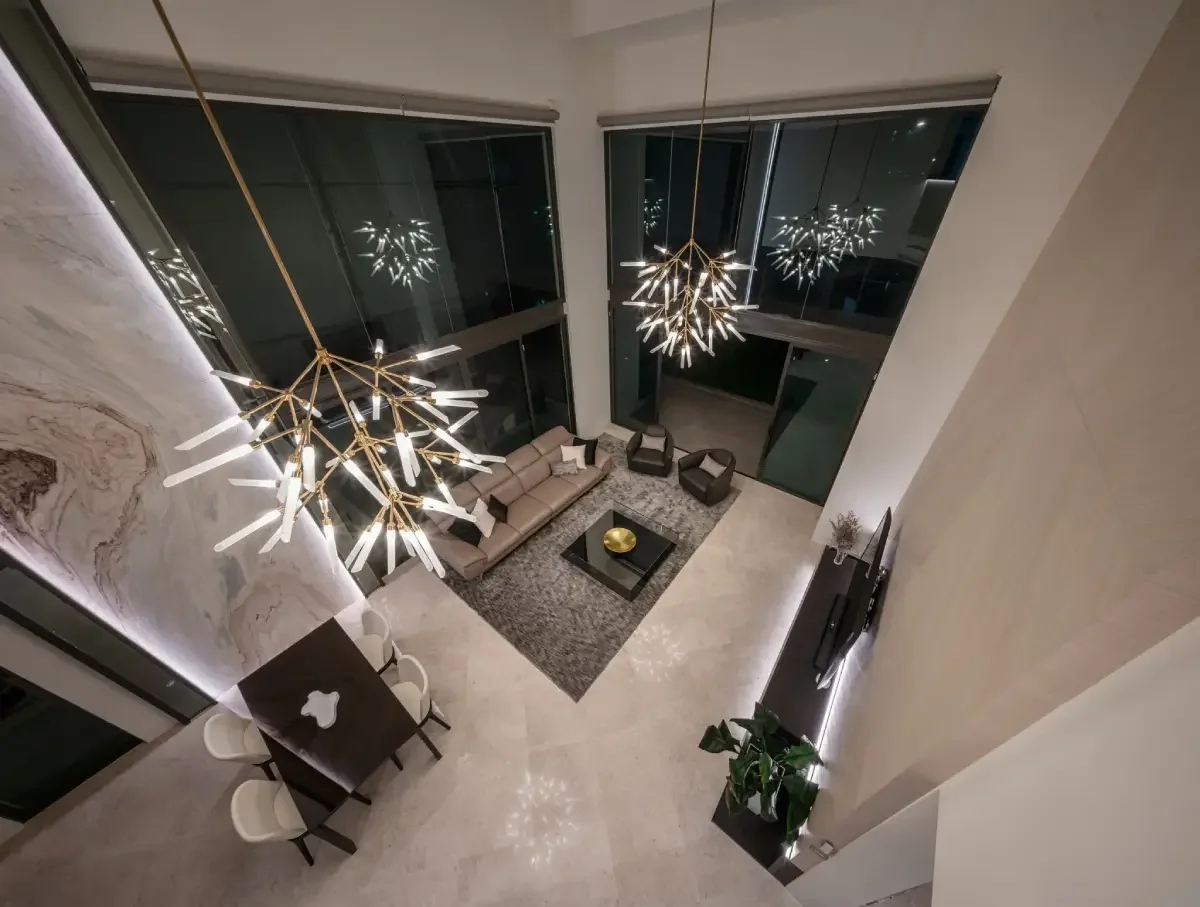
One of the clearest markers of a well-resolved living room is consistency. A space may draw from more than one style, but it still benefits from a unifying thread — whether through palette, materials, silhouette, or mood.
Without that thread, even individually attractive pieces can feel disconnected. When every element appears to belong to a different visual language, the room loses its sense of intention. By contrast, a cohesive approach allows each component to support the next, resulting in a space that feels composed rather than assembled.
This does not mean every room must be stylistically rigid. Contrasts can be compelling when handled with care. A contemporary space may incorporate rustic timber, or a more traditional scheme may be sharpened with restrained metal detailing. The key lies in ensuring these elements complement rather than compete.
In condominiums and landed homes alike, cohesion is often what gives a room its quiet confidence. It signals that each decision was made in relation to the whole.
Tip 2: Colour Works Best When It Feels Intentional
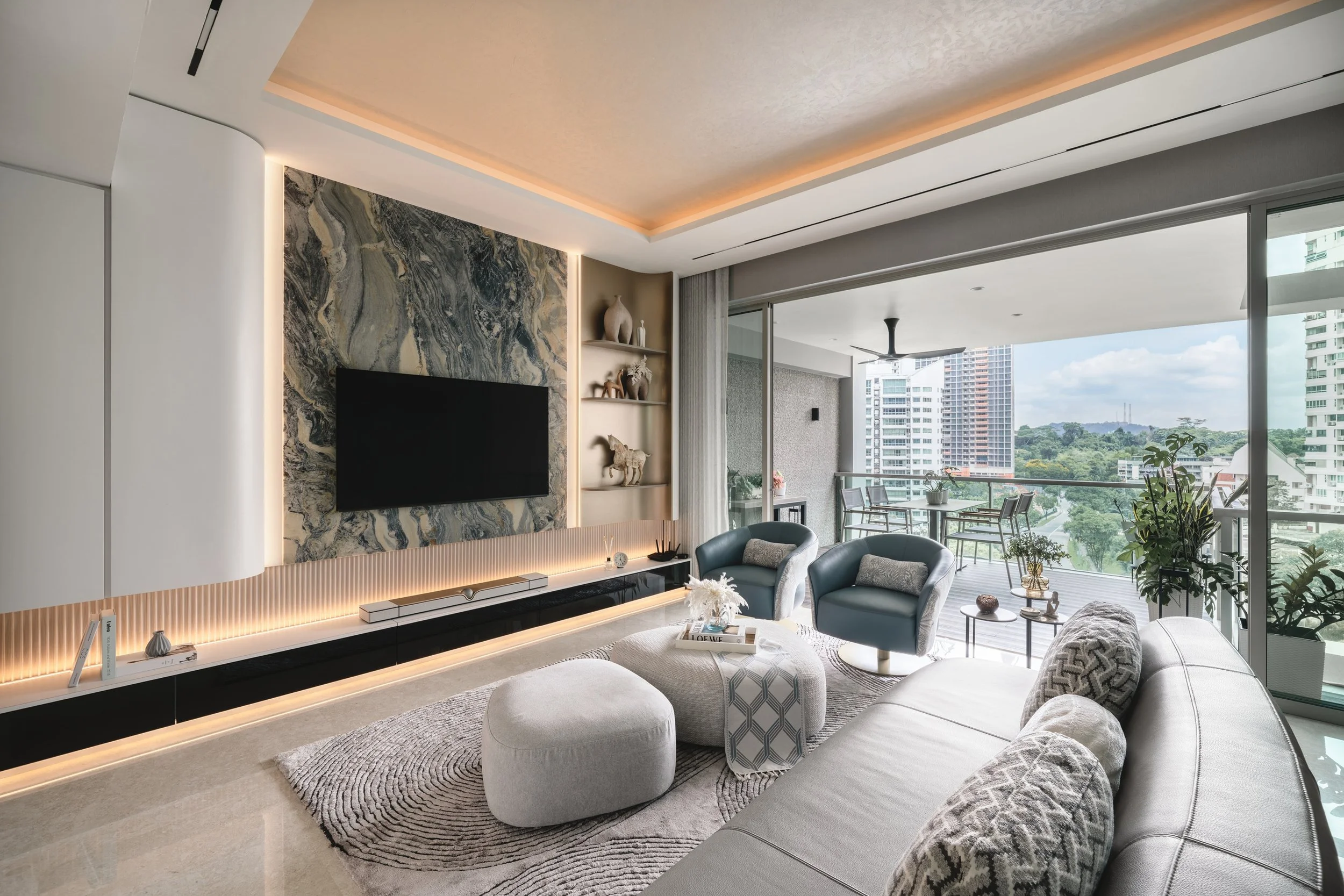
Neutral palettes remain popular for good reason. They create openness, reflect light well, and provide a calm backdrop for furniture and art. Still, a living room does not need to rely exclusively on beige, grey, or off-white to feel refined.
Used thoughtfully, colour can add depth and distinction. Shades such as forest green, navy, clay, or muted burgundy can bring warmth and personality without overwhelming the space. In many interiors, it is not the presence of colour that feels excessive, but the lack of control in how it is introduced.
Colour is also one of the most effective ways to shape the atmosphere. Cooler tones tend to create a sense of calm, while warmer hues often lend softness and intimacy. In homes with generous views, large windows, or strong natural light, the surrounding environment can also inform the palette indoors.
The strongest results tend to come from moderation. Thus, the top luxury interior design firms know that the use of colour often has greater impact than a room where every surface competes for attention.
Tip 3: Texture Brings Warmth and Depth
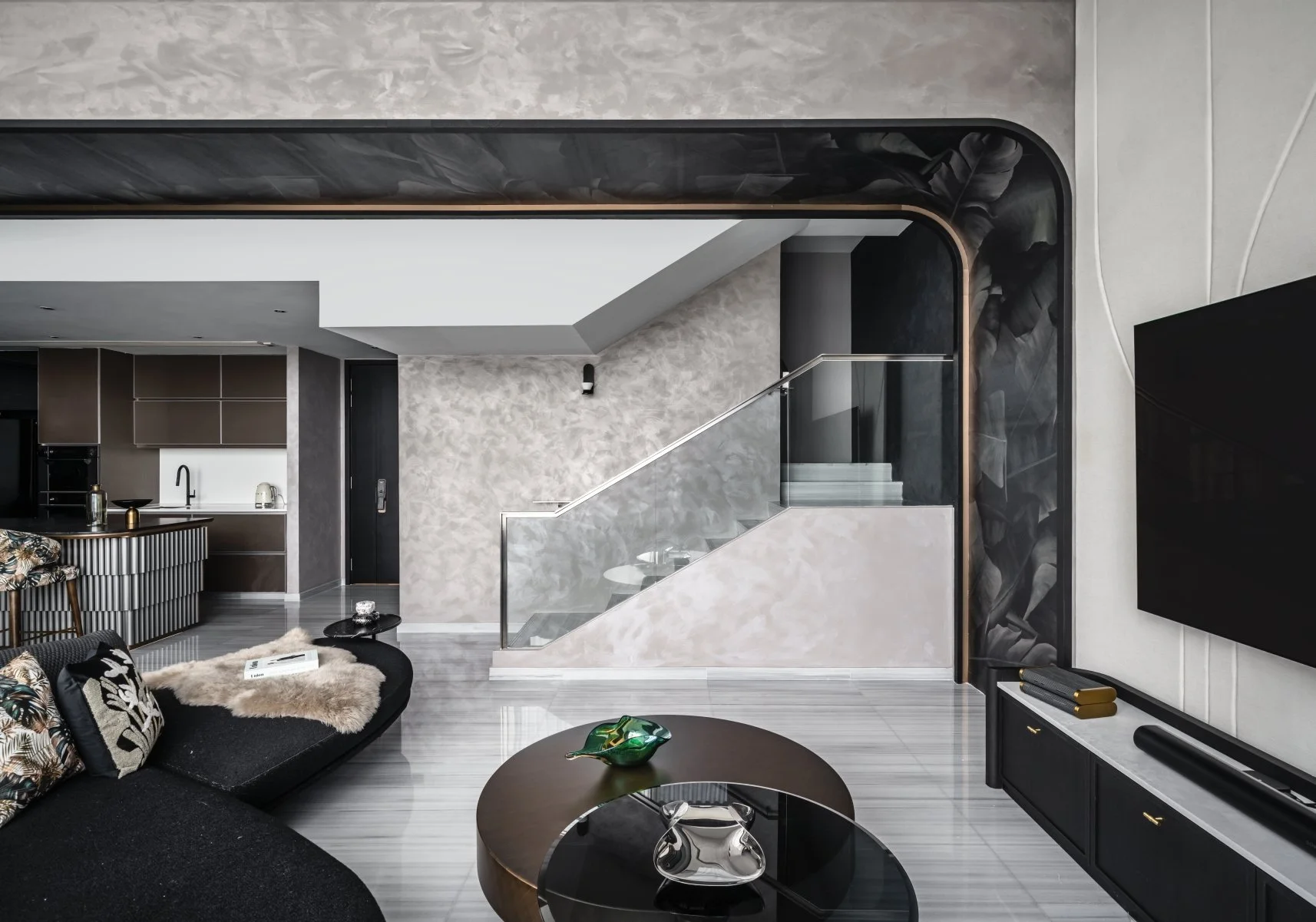
A living room with a restrained palette often relies on texture to keep the space from feeling flat. This is where softer layers (rugs, throws, cushions, upholstery, and curtains) become especially important.
Texture introduces variation not only visually but also tactually. A woven throw against smooth leather, or a plush rug beneath stone or timber finishes, creates contrast that makes the room feel more nuanced. These details can soften harder architectural surfaces and make the space feel more settled.
Materials such as wool, linen, velvet, boucle, and cotton each bring a different quality to the room. The best combinations are usually those that balance smoothness with grain, polish with softness, and structure with comfort.
Rather than being treated as decoration alone, these elements help shape how a space is experienced on a day-to-day basis.
Tip 4: The Living Room Should Relate Naturally to the Dining and Kitchen Areas

In many contemporary homes, the living room does not stand alone. It often connects visually and spatially to the dining area and kitchen, especially in open-plan condominiums and larger landed interiors. Because of this, the success of the living room is often tied to how well it relates to the spaces around it.
A strong layout allows movement between zones to feel easy and unobstructed while still giving each area a distinct identity. This distinction does not necessarily require walls or heavy partitions. In many cases, changes in rug placement, lighting, furniture orientation, or material treatment are enough to define one zone from another.
What matters most is clarity. When these adjoining areas are visually connected but appropriately zoned, the home feels more fluid and better resolved. When too many competing elements are introduced, the result can feel crowded rather than layered.
A thoughtful relationship between lounge, dining, and kitchen spaces often contributes more to the feel of a home than any single decorative feature.
Tip 5: A Good Layout Supports Conversation as Well as Comfort
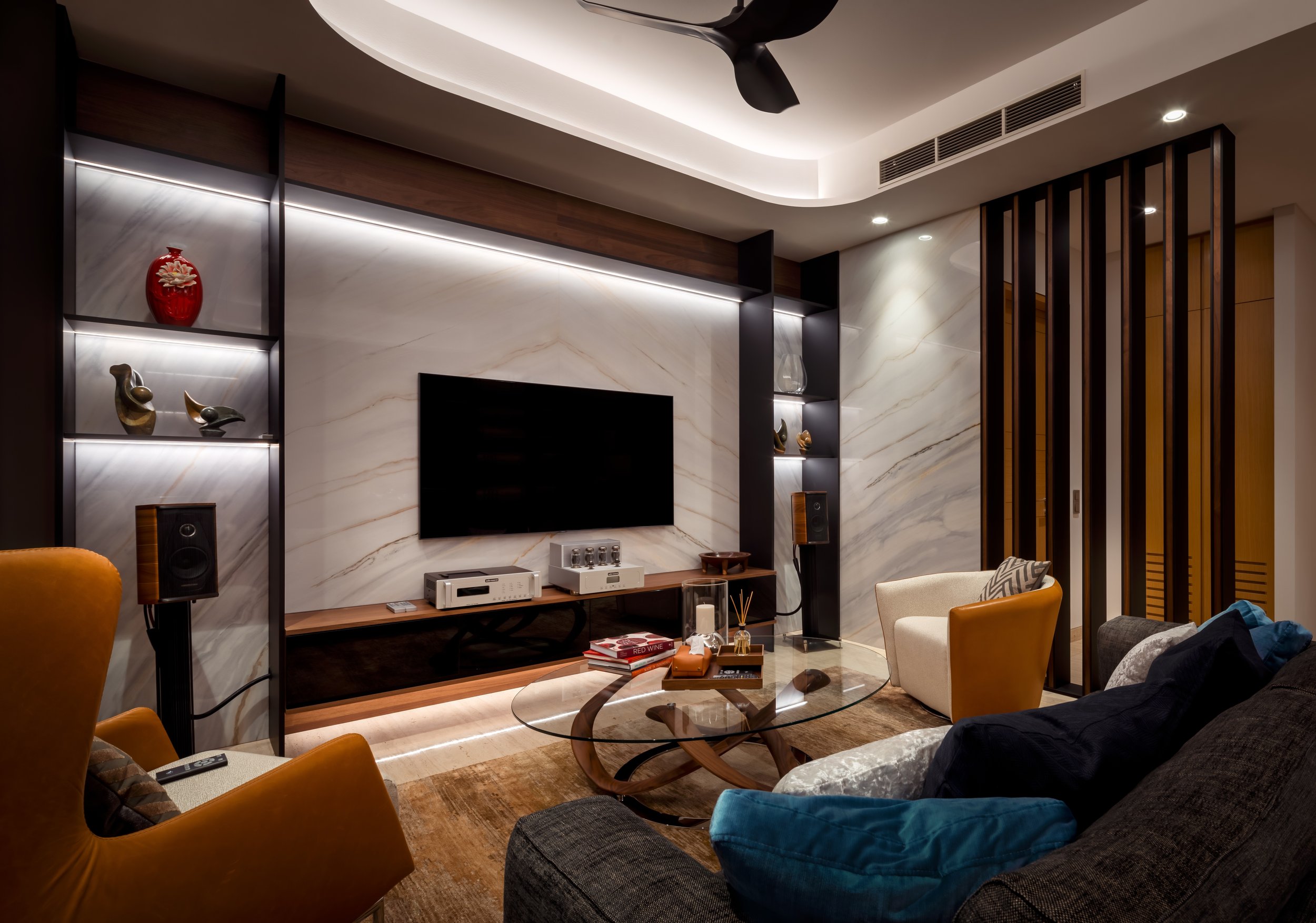
Many living rooms are naturally organised around a television, but rooms that feel inviting usually offer more than a single viewing position. They allow for conversation, reading, pausing, and gathering without every seat being locked into one direction.
This is where furniture layout becomes especially important. Seating that acknowledges both the television and the people in the room tends to feel more considered than a purely screen-oriented arrangement. An L-shaped sofa, a pair of armchairs, or a chair placed at a gentle angle can shift the room from functional to sociable.
Even in more compact layouts, a small adjustment in orientation can make a noticeable difference. The room begins to support interaction rather than simply accommodate it.
Comfort, in this context, is not only about softness or upholstery. It is also about how naturally people can inhabit the space together.
Tip 6: Personal Objects Give the Room Character
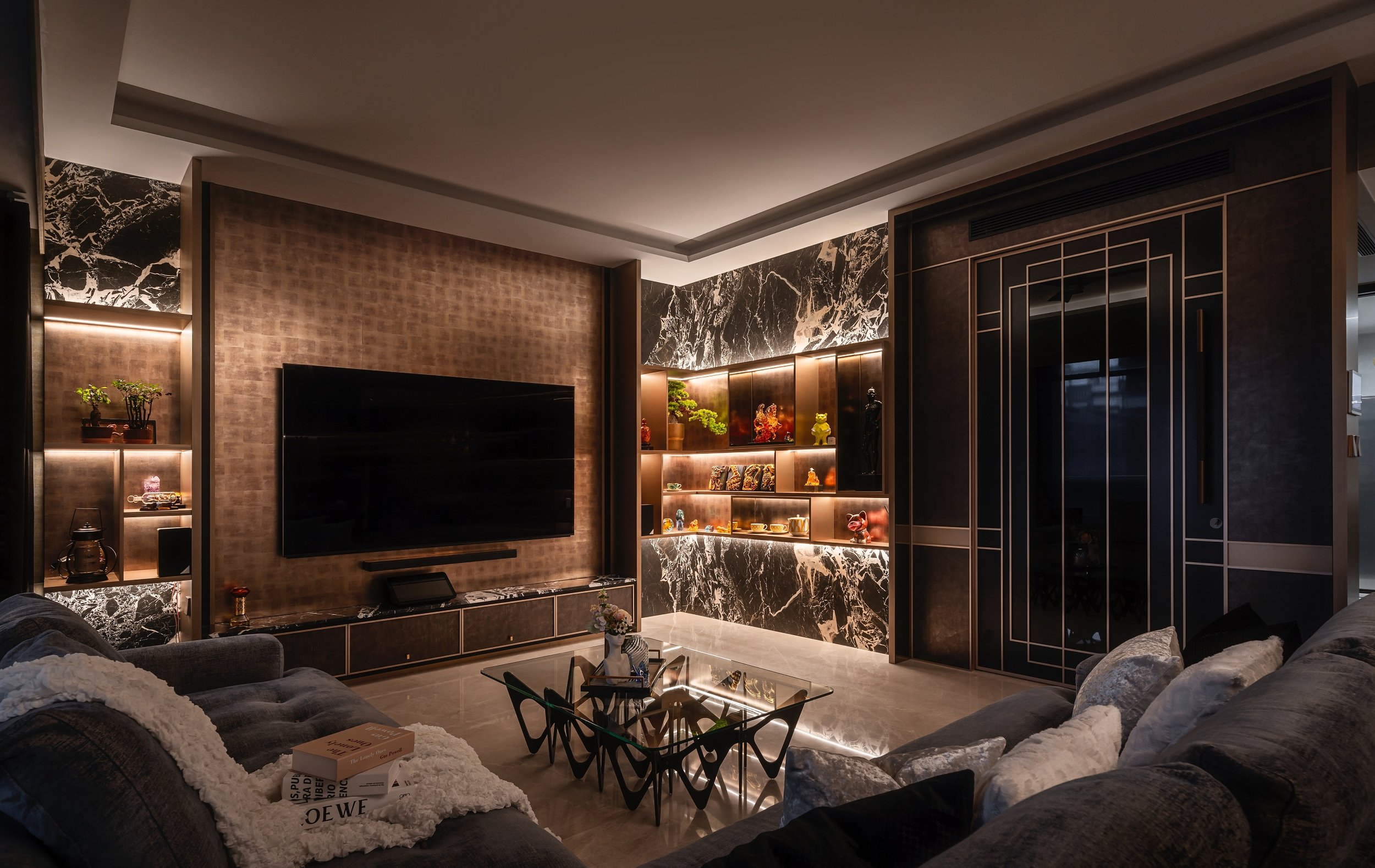
The most memorable living rooms rarely feel anonymous. Even when the design is restrained, there is usually something personal within it — artwork collected over time, books, travel pieces, ceramics, objects with history, or items that reflect a particular interest or point of view.
These details bring individuality to the room. They interrupt the generic quality that can sometimes emerge when a space is styled too uniformly. More importantly, they introduce narrative. A room begins to feel lived in rather than merely arranged.
That said, curation matters. Personal objects tend to be most effective when given room to breathe. A shelf or console with a few well-placed pieces usually feels more elegant than one filled edge to edge. Negative space helps each item register more clearly and prevents the display from becoming visual noise.
In this way, character is built not only through what is shown, but also through what is deliberately left out.
Tip 7: Lighting Shapes the Atmosphere of the Room

Luxury is often associated with materials, but lighting plays just as significant a role in how a room is perceived. It affects depth, comfort, mood, and even how textures and finishes are read.
A well-designed living room typically uses more than one type of light. Ambient lighting provides general illumination, task lighting supports reading or focused activity, and accent lighting draws attention to art, joinery, or architectural details.
Layering these forms of lighting allows the room to adapt throughout the day. Brighter, clearer light may suit morning routines or practical use, while warmer lighting can create a more relaxed atmosphere in the evening.
Tone is just as important as placement. Cool light tends to feel energising, warm light feels softer and more intimate, and neutral light offers a more balanced reading of colour and material. When used in combination, these lighting conditions allow a living room to feel versatile without losing its composure.
The most effective lighting schemes are often the least obvious. They work quietly in the background, enhancing the room rather than announcing themselves.
Tip 8: Natural Light Reveals the Best Qualities of a Space

Natural light has a unique ability to animate a room. It changes throughout the day, draws out texture, and gives surfaces a quality that artificial light rarely replicates fully. In living rooms, this can make a substantial difference to how materials, colours, and proportions are experienced.
Homes with wide openings, balconies, or floor-to-ceiling glazing often benefit particularly from this. Daylight can soften a palette, highlight the grain of timber, pick up the veining in stone, and create a greater sense of openness.
At the same time, natural light benefits from control. Sheers, blinds, and curtains help regulate glare and diffuse stronger sunlight, ensuring the room remains comfortable and visually balanced. This is especially important where direct afternoon light is intense.
A living room designed with natural light in mind tends to feel more generous, more breathable, and more responsive to the rhythms of the day.
Tip 9: Biophilic Elements Add Softness and Balance
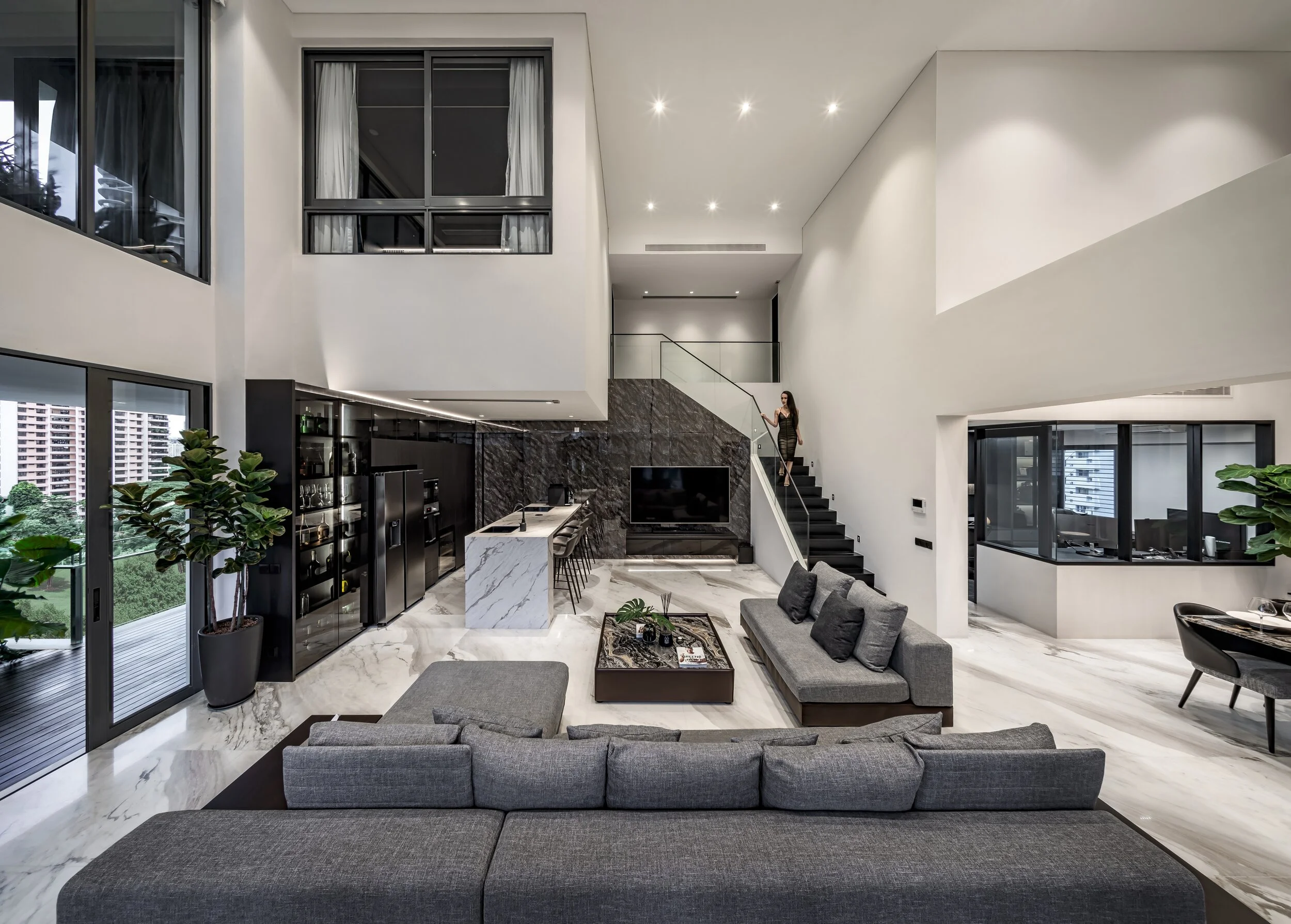
Biophilic design is often associated with plants, but more broadly it refers to the ways interiors can reflect and reconnect with the natural world. In living rooms, this may be expressed through greenery, stone, timber, linen, or forms and textures that feel organic rather than overly rigid.
These elements often work well because they soften the geometry of the built environment. A sculptural plant, a timber side table, or a linen-upholstered chair can bring variation and warmth to a space dominated by straight lines and hard finishes.
Their effect tends to be strongest when applied with restraint. A few carefully chosen elements can create contrast and vitality without pushing the room towards a themed or overly decorative look.
When integrated subtly, biophilic details help a living room feel calmer, more grounded, and more complete.
Why the Living Room Often Deserves Particular Attention
The living room often carries more visual and functional importance than any other shared space in the home. As the setting for both everyday routines and first impressions, it plays a key role in shaping how the rest of the interior is experienced.
For that reason, thoughtful attention to its layout, atmosphere, and material language can have an outsized impact on the home as a whole.
It Anchors the Shared Spaces of the Home
The living room is often the point from which the rest of the home is experienced. It connects circulation routes, adjoins key communal areas, and frequently acts as the visual centre of the interior. Because of this, its design influences how the home is understood as a whole.
It Shapes First Impressions
For many visitors, the living room is the first interior space encountered. Its atmosphere, proportions, and level of resolution help establish an immediate impression of the home. A well-considered room does not need to be overstated to feel memorable; often, its effect comes through clarity and ease.
It Supports Multiple Functions
Unlike rooms with a single clear purpose, the living room accommodates a range of uses. It may serve as a place for conversation, reading, hosting, resting, or simply passing through at different points in the day. This flexibility makes thoughtful design especially valuable here.
It Balances Presentation and Everyday Use
A successful living room does not look polished at the expense of comfort, nor does it prioritise function so heavily that the room loses atmosphere. Its role is to hold both qualities together — to feel welcoming in daily life while still carrying a sense of composure.
Planning a Living Room with Greater Intent
Designing a living room well is often not about adding more items, but more about refining what matters. Cohesion, light, texture, proportion, and layout tend to have greater long-term impact than trend-driven features or overly decorative gestures.
Whether the setting is a condominium overlooking the city or a landed home with more expansive spatial possibilities, the strongest interiors are usually those that feel calm, resolved, and specific to the way the home is lived in.
For homeowners considering a living room redesign, it is often worth beginning with the fundamentals: how the room should feel, how it connects to adjacent spaces, and which materials and furnishings will continue to feel relevant over time. From there, the design can develop with greater clarity and purpose.
If you are ready to transform your living room into a world-class space, we are ready to help. Contact us today to begin your consultation.
Frequently Asked Questions
How should a living room rug be sized so that the room feels well-proportioned?
A rug should generally be large enough to relate properly to the main seating arrangement rather than feeling like an isolated accessory. In many living rooms, this means allowing at least the front legs of the sofa and chairs to sit on the rug, while leaving enough visible flooring around the perimeter to keep the room balanced.
How can a television be incorporated without dominating the room?
A television tends to feel less visually intrusive when it is integrated into a broader wall composition. This might include cabinetry, shelving, stone cladding, or sliding panels that allow the screen to sit within a larger architectural feature rather than appearing as a standalone focal point.
What works better in a conversational layout: a coffee table or an ottoman?
Both can work well, depending on the intended use of the room. A coffee table offers a firmer surface for books, objects, and drinks, while an upholstered ottoman introduces softness and can double as additional seating. The choice usually depends on whether practicality or softness is the stronger priority in the overall scheme.
How can personal collections be displayed without making the room feel cluttered?
The key is editing. A smaller number of meaningful pieces, displayed with appropriate spacing, usually has more presence than a dense arrangement of objects. Shelving, consoles, and niches tend to work best when they allow each piece enough room to be noticed.